
Thyroid Tumor Surgery in Ahmedabad
Thyroid Tumor Surgery in Ahmedabad
Thyroid cancer is a type of cancer that starts in the thyroid gland. The thyroid is a butterfly-shaped gland at the base of your neck, just below your Adam's apple. Your thyroid produces hormones that regulate your heart rate, blood pressure, body temperature and weight.
About
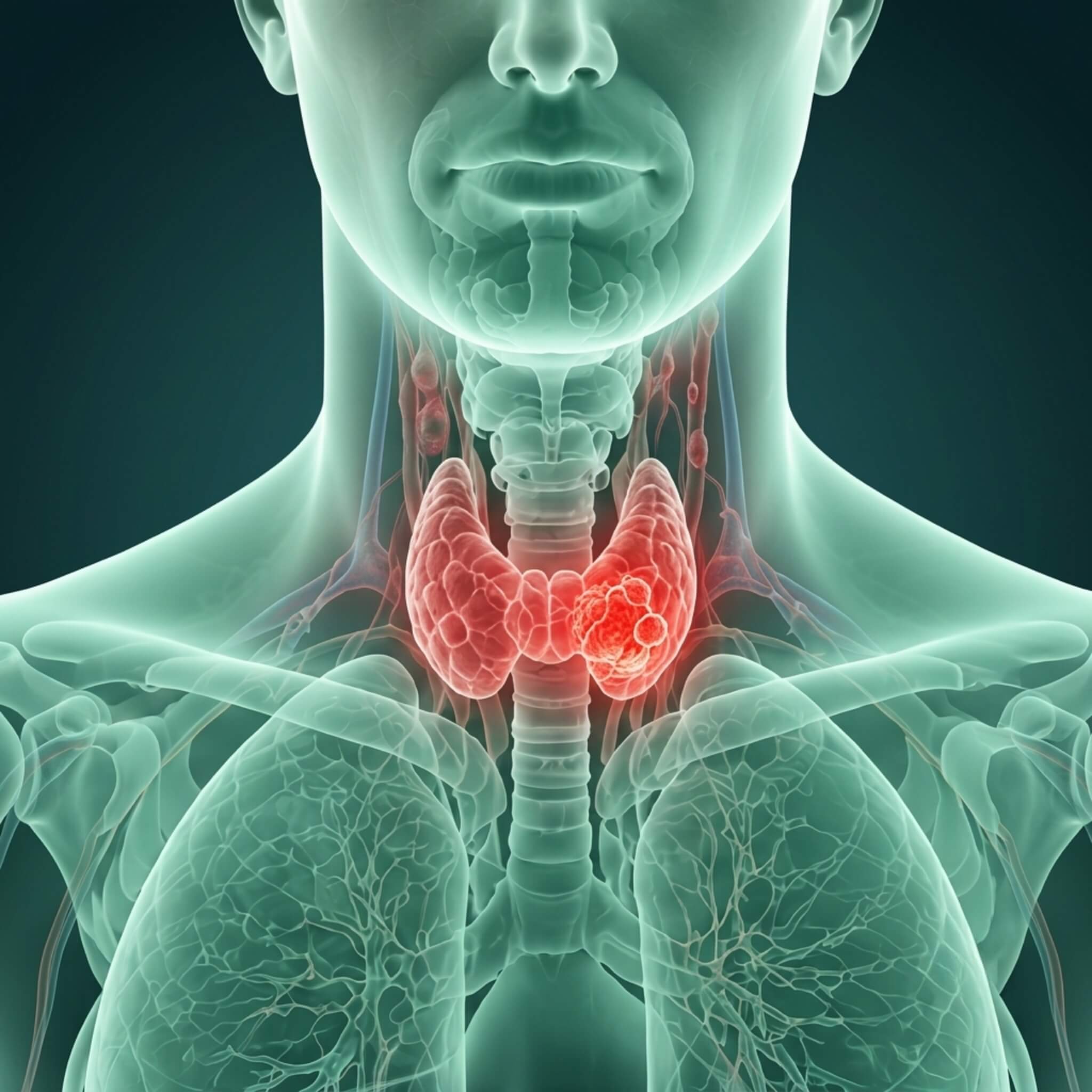
The thyroid is a small gland located below the voice box in the front of the neck. It is made up of two lobes and is shaped like a butterfly. As part of your endocrine system, this gland makes hormones that affect your heart rate, temperature, mental function, and metabolism.
If cells in the thyroid gland grow uncontrollably, they form a nodule (tumor). Most (90 percent) of thyroid nodules are benign (noncancerous). But 1 out of 10 are malignant (cancerous).
Types of Thyroid Cancer
Papillary Thyroid Cancer
Most people with thyroid cancer have papillary thyroid cancer. This type of tumor grows slowly. It usually starts in one lobe of the thyroid. Although it can spread to other parts of the body, it's usually treatable.
Follicular Thyroid Cancer
Fewer people have follicular thyroid cancer than papillary thyroid cancer. This type of thyroid cancer tends to grow slowly. When it's treated the right way, it can often be cured.
Hurthle Cell Carcinoma
This is a rare form of follicular thyroid cancer.
Medullary Thyroid Carcinoma (MTC)
MTC usually appears in older adults and affects one of the thyroid's two lobes. It starts in the parafollicular C cells of the thyroid gland and increases serum calcitonin levels.
Anaplastic Carcinoma
This type of thyroid cancer is sometimes called undifferentiated carcinoma. The disease usually develops from a papillary thyroid cancer or follicular thyroid cancer that's in the body already. It spreads quickly throughout the neck and other parts of the body.
Risk Factors
A risk factor for thyroid cancer is a condition, behavior, or other part of your life that increases the likelihood of developing the disease.
Risk factors for papillary thyroid cancer include:
- Radiation exposure: People who were exposed to radiation in their childhood, have a higher chance of developing papillary thyroid cancer.
- Inherited conditions: People with a family history of multiple colon growths because of inherited conditions may be at an increased risk for papillary thyroid cancer.
- Family history: For about 5 percent of people who develop papillary thyroid cancer, the disease runs in the family.
- Gender: It's unclear why, but papillary thyroid cancer occurs about three times more often in women than in men.
Risk factors for follicular thyroid cancer include:
- A low-iodine diet. People are more likely to develop follicular carcinoma if they live in a place where iodine isn't added to salt that's used in food.
- Familial conditions.
- Inherited disorders, such as Werner's syndrome and Cowden's syndrome
Risk factors for medullary thyroid cancer (MTC):
- Family history. Approximately 25 percent of people with MTC have inherited a mutation in a gene called RET.
##### No matter what risk factors for thyroid cancer you might have, Dr Supreet Bhatt will help you for proper diagnosis and the most effective treatment.
Sign & Symptoms
Symptoms
Many people with thyroid cancer don't have any signs or symptoms of the disease.
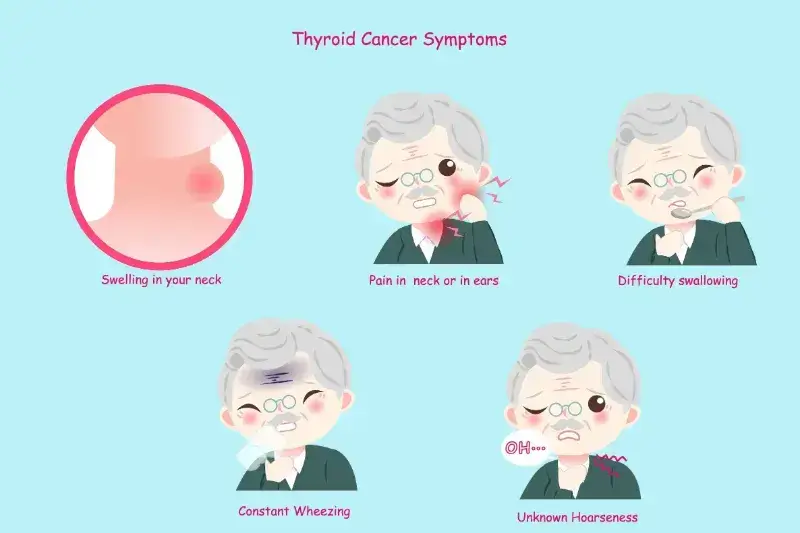
Common Symptoms:
- Painless Lump/ Swelling around front of the neck area / near Adam's apple
- Swollen neck lymphnodes
Other symptoms can include:
- Hoarseness of voice
- Trouble swallowing
- Breathing problems
- Pain in the throat or neck that doesn't go away
- A cough that doesn't go away
You can speak with Dr Supreet Bhatt, if you or your loved one has any of these symptoms, to get a proper diagnosis and correct treatment.
Thyroid Nodule Assessment Program
A thyroid nodule is an abnormal growth of thyroid cells that forms a lump within the thyroid gland. Thyroid nodules are very common. Most of them are noncancerous (benign). A few may contain thyroid cancer and may require treatment.
We offer a comprehensive Thyroid Nodule Assessment Program for people who want to have a thyroid nodule evaluated closely. We will determine a personalized care plan for you. Some people may have surgery for thyroid nodules or thyroid cancer, but others won't need to. We may recommend active surveillance to some patients.
Diagnosis & Treatment
Diagnosis
Physical examination
During your first appointment, we will do a physical examination. We will check for any unusual growths or swelling in your:
- Thyroid gland
- Throat
- Vocal cords
- Lymph nodes
Radiological Imaging
An Ultrasound(Sonography) of your neck helps us figure out whether we should look at a thyroid nodule more closely in the form of a biopsy. We may also recommend some otherimaging tests — such as a CT, MRI, or PET scan — to get a better look at a thyroid nodule , if in doubt.
Thyroid Biopsy/ Tissue diagnosis
To do a biopsy, we remove a small sample of tissue from the area to examine under a microscope. This test helps us figure out if a thyroid nodule is benign (noncancerous) or malignant (cancerous).
We use two types of biopsies to diagnose thyroid cancer.
- FNAC(Fine needle aspiration cytology) can be done in a doctor's office or by a radiologist. Ultrasound helps us guide a very thin needle into the thyroid nodule to remove a small number of cells.
- Core biopsy is done for thyroid cancer that has spread (metastasized) outside the thyroid gland or is more advanced. This approach involves using a larger needle.
Molecular testing
When needed, we use molecular testing of tissue from a thyroid nodule to see if cancer cells are there.
- DNA approach: This type of molecular test looks for a few specific DNA mutations in the tissue that have been linked to thyroid cancer.
- Gene classifier: This type of molecular test doesn't look at specific mutations. Instead, it concentrates more on how various genes linked to thyroid cancer are expressed.
Blood Tests
Blood tests can help us figure out if the thyroid gland is working normally.
- If your TSH level is low, a thyroid stimulating hormone (TSH) test for follicular thyroid cancer can indicate if there is a thyroid nodule making high levels of thyroid hormone.
- The level of the hormone calcitonin in the blood is important to test for evaluating medullary thyroid carcinoma (MTC).
Risk Levels for Thyroid Cancer
We use information from the diagnosis of thyroid cancer to determine the cancer's risk level. The risk level reflects in part how likely it is that the cancer will spread beyond the thyroid gland. Our doctors offer treatment options to you based on whether your disease is low-risk or high-risk.
Treatment
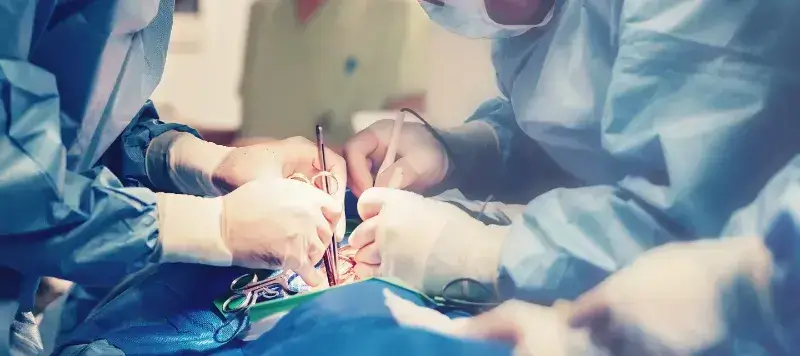
Once we confirm your diagnosis, we customize a treatment plan based on factors such as:
- The size of the tumor
- A genomic analysis of the tumor
- Whether the tumor has spread outside of the thyroid
- Your overall health and personal preferences
Thyroidectomy (Thyroid Removal Surgery for Tumors and Cancer)
A thyroidectomy is the surgical removal of all or part of the thyroid. It is the main treatment for most people with thyroid tumors. Your thyroid surgery options may include the partial removal of the thyroid (also called a thyroid lobectomy or hemithyroidectomy), a total thyroidectomy, or a total thyroidectomy with lymph node removal. Which approach is right for you depends on such factors as the size, stage, location, and type of thyroid tumor you have.
Dr Supreet Bhatt is a leading head and neck cancer surgeon who has a vast experience in treating thyroid tumors. He places a high value on the concept that less is more, tailoring therapy to each person's individual circumstances. This personalized approach provides the best option for control of the disease and quality of life after treatment.
Not every patient requires a total thyroidectomy, thyroid lobectomy may be sufficient for less-aggressive cancers. This may allow for preservation of some thyroid function and reduces the extent of the surgery.
Total Thyroidectomy
A total thyroidectomy is an operation to remove all of the thyroid gland. The surgery is done through an incision in the lower part of the front of your neck. Your surgeon will inspect your thyroid tumor, decide how much of the gland needs to be removed, and check the lymph nodes next to your thyroid.
Thyroid Lobectomy (Hemithyroidectomy)
In a thyroid lobectomy, only one of the two lobes that make up the thyroid gland is removed. Candidates for a thyroid lobectomy are most often people with less-aggressive, early-stage disease.
Lymph Node Removal
If your tumor has spread or is likely to spread to your lymph nodes, we will remove the lymph nodes in your neck during your thyroid surgery. The goal is to remove the lymph nodes, while minimizing the complications.
Minimally Invasive Thyroid Surgery
Minimally invasive surgery involves the removal of a thyroid tumor through a very small incision in the neck that fall into natural skin creases. The priority remains the complete removal of the tumor with preservation of the laryngeal nerves and parathyroid glands. The incisions we use for open thyroid surgery are only slightly larger than those used for minimally invasive surgery.
Laryngeal Nerve Monitoring
Thyroid surgery requires tremendous precision on the part of your entire surgical team. To prevent nerve damage, your surgeon may need to locate and work around the laryngeal nerves. The laryngeal nerves run near the thyroid and are important in producing the sound of your voice.
We have extensive experience in using advanced nerve-monitoring technology to prevent the nerve damage that can result from thyroid surgery.
Parathyroid Preservation
We place a priority on preserving the parathyroid glands, which are vital in controlling your body's calcium balance. In some cases, we may re-implant a parathyroid gland that needed to be removed during thyroid cancer surgery.
Surgery for Locally Advanced and Invasive Thyroid Cancer
Locally advanced and invasive thyroid disease includes those cancers that have invaded the larynx, trachea, esophagus, the chest ( mediastinum) and great vessels of the neck. Such cancers can be a challenge to remove.
For example, if the disease has spread to the lymph nodes in the upper chest, we may collaborate with our highly skilled thoracic surgeons to ensure that we perform the most complete tumor removal possible.
Other Treatment Options for Advanced Thyroid Cancer
Radiation therapy and other forms of systemic treatments with anti-cancer drugs like target therapy can be an option for you if the disease becomes advanced. These approaches are sometimes effective if your cancer isn't responding to other therapies anymore.
Thyroid Hormone Therapy after Surgery
Thyroid surgery often has an effect on the body's production of hormones. Normal hormone levels are important for your health, including your metabolism, and also for preventing certain thyroid cancers from coming back. You might be prescribed thyroid pills to ensure that your body maintains normal levels of hormones.
Radioactive Iodine after Thyroidectomy
Radioactive iodine (RAI) treatment is used to destroy the residual microscopic abnormal thyroid tissue that might have been remaining after surgery. RAI therapy is most commonly recommended after a thyroidectomy for people with follicular thyroid cancer or advanced papillary thyroid cancer.
Radiation Therapy after Thyroidectomy
Postoperative radiation therapy is typically recommended for patients with:
- anaplastic thyroid cancer
- locally advanced, invasive, or recurrent thyroid cancer
- cancer that could not be removed completely during surgery
Why Choose Us
- You receive customized care for your thyroid cancer from one of the most renowned Thyroid cancer specialist nationwide. Your treatment being in the hands of Dr Supreet Bhatt, increases your chance for successful treatment and boosts your confidence significantly.
- He believes in working in a team, in the best of your interests , to ensure that you recieve seamless, coordinated care.
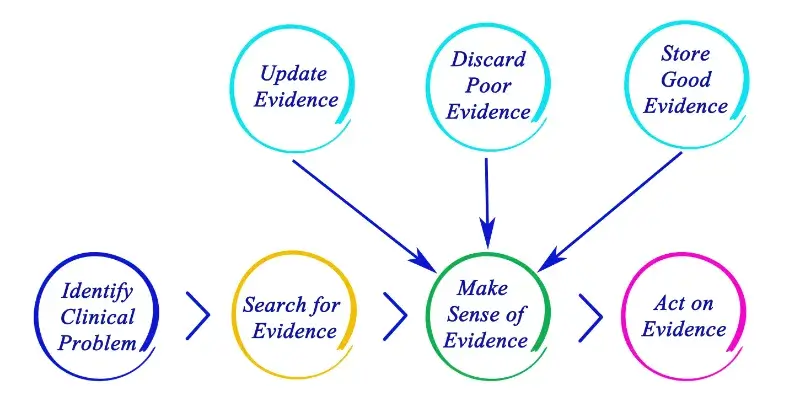
- His scientific and evidence based treatments helps avoiding unnecessary complications and side effects .
- Minimally invasive and scarless surgeries can give you the best possible cosmetic results.
- Dr Supreet Bhatt uses the most advanced surgical techniques that are proven to have good results, oncologically as well as cosmetically. He is skilled in performing complex surgeries, including procedures for residual cancers, recurrent cancers and cancers that impact critical structures in the head and neck area.
FAQs
Is It Possible for Thyroid Cancer to Spread Over Parathyroid?+
Does Mood or Personality Change Occur in Thyroid Tumors?+
Is Death Certain with Thyroid Cancer?+
What Is Low-Risk Thyroid Cancer?+
What Is High-Risk Thyroid Cancer?+
Thyroid Surgery Recovery+
Ready to Schedule an Appointment?
Contact Dr. Supreet Bhatt to discuss your condition and treatment options.
Contact Us