
Oral Cancer Surgeon in Ahmedabad
Oral Cancer Surgeon in Ahmedabad
Oral cancer, also known as mouth cancer is a type of head and neck cancer recognised by any cancerous tissue (ulcer/growth) located in the oral cavity. Most (90%) oral cancers look very similar under the microscope and are called squamous cell carcinoma. Alternatively, the oral cancers may originate in any of the tissues of the mouth, and may be of varied histologic types.
About
 Cancers.jpg)
Oral cancer, also known as mouth cancer is a type of head and neck cancer recognised by any cancerous tissue (ulcer/growth) located in the oral cavity. The oral cavity where growth takes place includes the following:
- The front two thirds of the tongue.
- The gingiva (gums).
- The buccal mucosa (the inner lining of the cheeks).
- The floor (bottom) of the mouth under the tongue.
- The hard palate (the roof of the mouth).
- The retromolar trigone (the small area behind the wisdom teeth)
Most (90%) oral cancers look very similar under the microscope and are called squamous cell carcinoma. Alternatively, the oral cancers may originate in any of the tissues of the mouth, and may be of varied histologic types.
Not all tumors in the mouth are cancers. Some are benign (simple/non cancerous) and some others are precancerous (potential to get converted into cancer in future)
Risk Factors
What Causes oral cancers?
Mouth cancer can affect anyone, but using tobacco products and regularly drinking too much alcohol greatly increase your chances.

- Tobacco: Studies have shown that as many as eight in ten people with mouth cancer are tobacco users. Tobacco includes both smoking and smokeless tobacco (snuff and chewing tobacco).
- Alcohol: Excessive consumption of alcohol is the other major risk factor for mouth cancer besides tobacco use.
- Tobacco and alcohol: The combination of tobacco and alcohol increases the risk for mouth cancer even further than either two risk factors alone. Studies have shown that people who use tobacco and alcohol together have a substantially greater risk for mouth cancer than people who don't smoke or drink. According to the studies, nicotine and alcohol together account for around 80 percent of mouth cancers.
- Betel quid Paan Masala and gutka
- Constant trauma/irritation by sharp teeth or dentures or dental implants
- Excessive spicy/hot/smoked food habits
- Oral health: Poor oral hygiene and missing teeth may be weak risk factors for cancers of the oral cavity.
- Gender: Mouth cancer is nearly twice as common in men as in women, mainly because men have higher rates of tobacco and alcohol use.
- Age: Cancers of the mouth usually take many years to develop, so they are not common in young people. Most people are over 40 when cancer is first found in the mouth. Though, the times are changing and many young people in india succumb to mouth cancers these days.
- Ultraviolet light: Lip and skin cancers are more common in people who spend time in the sun.
- Infection with the sexually transmitted disease: human papillomavirus (HPV)
Other risk factors for mouth cancer include:
- A diet low in fruits and vegetables
- A weakened immune system
- Lichen planus, a disease that often affects the skin
- Certain genetic syndromes, such as Fanconi anemia and dyskeratosis congenital
Sign & Symptoms
Usually there are always some minor symtoms to start with and if identified earler, we have a good chance of complete cure from the cancer.Here are some of the commonly felt clinical features of mouth cancers (oral cancers).
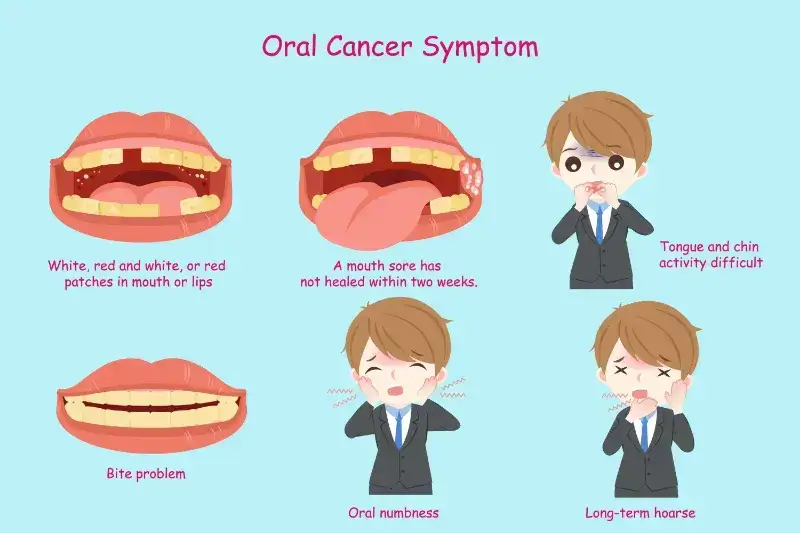
- Mouth ulcers that do not heal: A broken area of skin (ulcer) that will not heal can be a symptom of mouth cancer. Most people with mouth cancer have this symptom.
- A swelling of the jaw that causes dentures to fit poorly or become uncomfortable
- Pain or discomfort in your mouth that doesn't go away
- White or red patches in the mouth.
- An abnormal-looking patch could be a sign of cancer or precancerous changes. These patches are not cancer, but if left untreated, they may lead to cancer.
- White patches are called leukoplakia.
- Red patches are called erythroplakia.
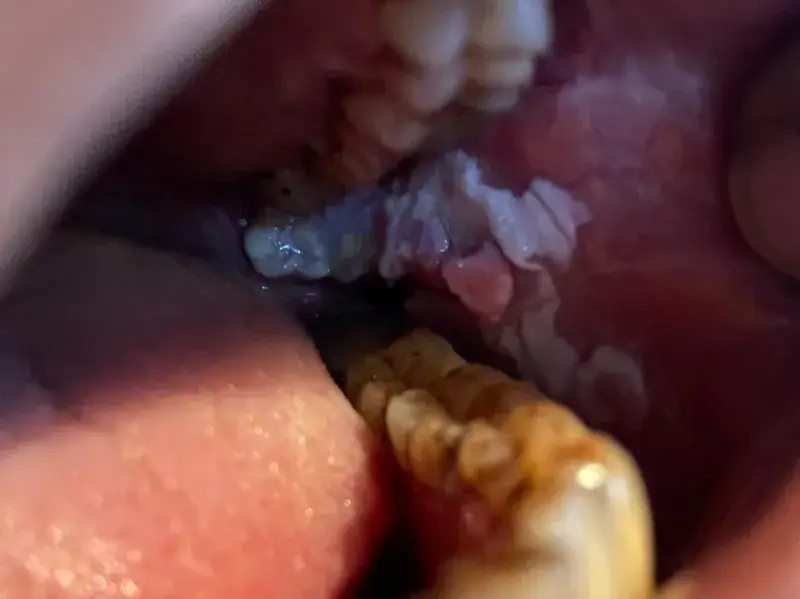
- A fungal infection called oral thrush can also cause red and white patches.
- Bleeding: nose, mouth or throat- unusual bleeding or pain in the mouth.
- Swallowing problems: Difficulty in swallowing
- Pain or a burning sensation when chewing and swallowing food. You might feel like food is sticking in your throat.
- You may also feel cough while swallowing any food.
- Speech problems: You might sound different- change in voice - quieter or husky- hoarseness of voice. It may sound as if you have a cold all the time. You might slur some of your words or have trouble pronouncing certain sounds.
- A lump in your neck: You may have a lump in your neck caused by an enlarged lymph node due to cancer. Lumps that come and go are usually not due to cancer. Cancer typically forms a lump that slowly gets bigger.
- Weight loss: Mouth cancer can make it painful to eat and difficult to swallow, which can cause weight loss.
Other signs of mouth cancer
- A lump or thickening in your lip
- A lump in your mouth or throat
- Unusual bleeding or numbness in your mouth
- Loose teeth for no clear reason
- Difficulty moving your jaw
Diagnosis & Treatment
To start with, we take a complete medical history, including your history of any risk factors. If you have an ulcer or other possible signs of cancer, we ask you questions regarding when it developed and whether it has changed in size or appearance.

We have sophisticated pathology and imaging tests and a team of radiologists and pathologists who perform these tests, who specialize in head and neck cancers. They ensure that you get the right diagnosis and to personalize your care as much as possible. This is a key first step in developing the best treatment plan for you.
Oral Tissue Biopsy
An oral tissue biopsy is the first step in diagnosing mouth cancer. During the biopsy, your surgeon removes a small amount of abnormal tissue from the area where mouth cancer is suspected. The tissue sample is then sent to a pathologist, who examines it under a microscope to make a diagnosis.
Diagnostic Imaging for Mouth Cancer
As part of making a diagnosis, a radiologist will take special imaging studies, such as CT scans, MRIs, or PET scans. These imaging tests provide more details about the tissue. If cancer is found, the scans can show how deep the cancer is and if it has spread.
We use the most advanced imaging technologies to safely detect and monitor cancer. And we choose the imaging approach that's best for you and to define the precise extent of your mouth cancer.
Mouth Cancer Treatment
There are several ways to treat mouth cancer, depending on the location and stage, including:
- Surgery: to remove the cancer
- Radiation Therapy/Chemotherapy: to prevent recurrences
If you have mouth cancer, we will discuss your treatment options with you. To make an informed choice, ask about the pros and cons of each options. We will design a treatment plan especially for you. Their areas of expertise include surgery, radiation therapy, chemotherapy, radiology, reconstruction, rehabilitation, and quality-of-life issues.
Our goal is to give compassionate, personalized care to every person who comes to us for mouth cancer treatment.
Mouth Cancer Surgery
Surgery is the main treatment for most people with mouth cancer. Usually these tumors can be removed through the opening of the oral cavity, but some may require a more extensive approach. Which surgery is right for you depends on such factors as the size, stage, and location of your tumor. We believe in working as a team, to create a precise treatment plan tailored to each person's individual needs.
Glossectomy
Glossectomy is the name of the surgery used to remove tongue cancers. For smaller cancers, only part of the tongue may need to be removed (partial glossectomy). For larger cancers, a more substantial portion of the tongue may need to be taken out.
We work closely with our speech therapist, before and after your surgery to design a personalized rehabilitation regimen, making sure that you maintain as much function in your tongue as possible.
Mandibulectomy
A mandibulectomy (also called mandibular resection) involves the removal of part of the jawbone (mandible) when a tumor is very close or attached to the bone. A mandibulectomy is most common for mouth cancers that begin in the lower gums or the floor of the mouth.
The amount of bone that needs to be removed during a mandibulectomy varies according to the location and extent of your tumor.
We use a combination of imaging and clinical expertise to make decisions about the need for, and the extent of, mandibular resection. We collaborate with our radiologists who specialize in Head & Neck imaging to precisely define the extent of your tumor. This ensures that you get just the right amount of treatment.
Maxillectomy
Maxillectomy is a surgery to remove bones that make up the hard palate (the bony front part of the roof of the mouth) or the nasal sinuses. It is most commonly recommended for mouth cancers that begin in the hard palate or the upper gums.
The space in the roof of the mouth that this operation creates can be addressed with either reconstructive surgery or a custom-fit obturator. Our team of plastic surgeons and maxillofacial prosthodontists collaborate closely to help patients decide which option is best for them, enabling them to speak and eat normally.
Lymph Node Removal During Mouth Cancer Surgery
Mouth cancers often spread to the lymph nodes in the neck. Removing the lymph nodes in the neck (and other nearby tissue) may be done at the same time as the surgery to remove the mouth cancer. The goal of this procedure is to remove lymph nodes shown to contain, or that are likely to contain, cancer and to reduce the chance that the cancer may return in the future.
We have extensive experience in performing these procedures and in preserving normal structures in the neck to leave minimal effects of surgery.
Reconstructive Surgery for Mouth Cancer
For many mouth tumors, we remove a large area that is affected by the tumor. The defects after tumor removal needs reconstruction. Reconstructive surgery for mouth cancer often involves the transplantation of tissue from one area of your body to the affected area of your mouth.
Our plastic and reconstructive surgeons have extensive experience in caring for people with mouth cancer. Their goal is to preserve the form and functions of your mouth by using the latest techniques available. The type of tissue transfer you have depends on the size and location of your primary tumor. Areas we commonly transfer tissue from include the forearm, the fibula (the smaller of the two bones in the lower leg), the thigh, and the abdomen.
Reconstruction for mouth cancer typically involves a microsurgical approach called free tissue transfer. This is when a plastic surgeon transfers a piece of your own tissue, along with the blood vessels, to the area where the cancer was removed in order to repair the surgical site. Tiny sutures (stitches) are used to connect the small blood vessels of the tissue to the blood vessels in the neck. That allows the transferred tissue to thrive and heal properly.
For people having reconstruction that involves the transfer of bone, we can use state-of-the-art virtual surgical planning software. This software based program enhances the precision of your operation. The software allows your doctors to develop a precise road map for your surgery. This approach results in shorter, more precise operations with potentially fewer complications.
Why Choose Us
We are constantly improving the treatment options available to people with mouth cancer. We have been involved with many of the modern approaches used to treat oral cancers which include surgical and reconstructive surgery techniques, along with innovative methods of various multimodality treatment.

- We provide unparalleled skill and experience in oral cancer surgery. Our techniques include innovative approaches to preserve your appearance and the function of your mouth
- We place a strong emphasis on removing the cancer completely while preserving your quality of life. Achieving this delicate balance is our goal. It allows us to provide you with the best option for control of the disease while being highly attentive to your ability to speak, eat, and swallow.
- We strive for both complete cancer removal as well as preservation of your appearance and the functions of your mouth.
- Our individualized treatment plans help you manage problems with speech, swallowing, and other side effects of mouth cancer and its treatment.
- Our dental team makes sure that you are in good oral health before treatment begins. They are there to support you during and after your treatment. We offer innovative approaches to place dental implants, which can eliminate the need for additional oral surgeries.
- Using sophisticated software, our plastic surgeons prepare tailored reconstruction plans that can achieve shorter, more precise operations with potentially fewer complications.
- We believe in teamwork and we closely work with imaging experts who are focused on Head & Neck cancers. This collaboration allows us to create an exquisitely precise roadmap of your cancer.
- We are dedicated to giving each patient the best quality of life possible.
- We provide all the services needed to treat the whole person- not just the disease.
Ready to Schedule an Appointment?
Contact Dr. Supreet Bhatt to discuss your condition and treatment options.
Contact Us